NR-17 and ergonomics: why this should be viewed as an investment, not a cost
How suitable chairs, well-planned workstations, and ergonomic choices impact comfort, productivity, and daily routines in corporate environments.
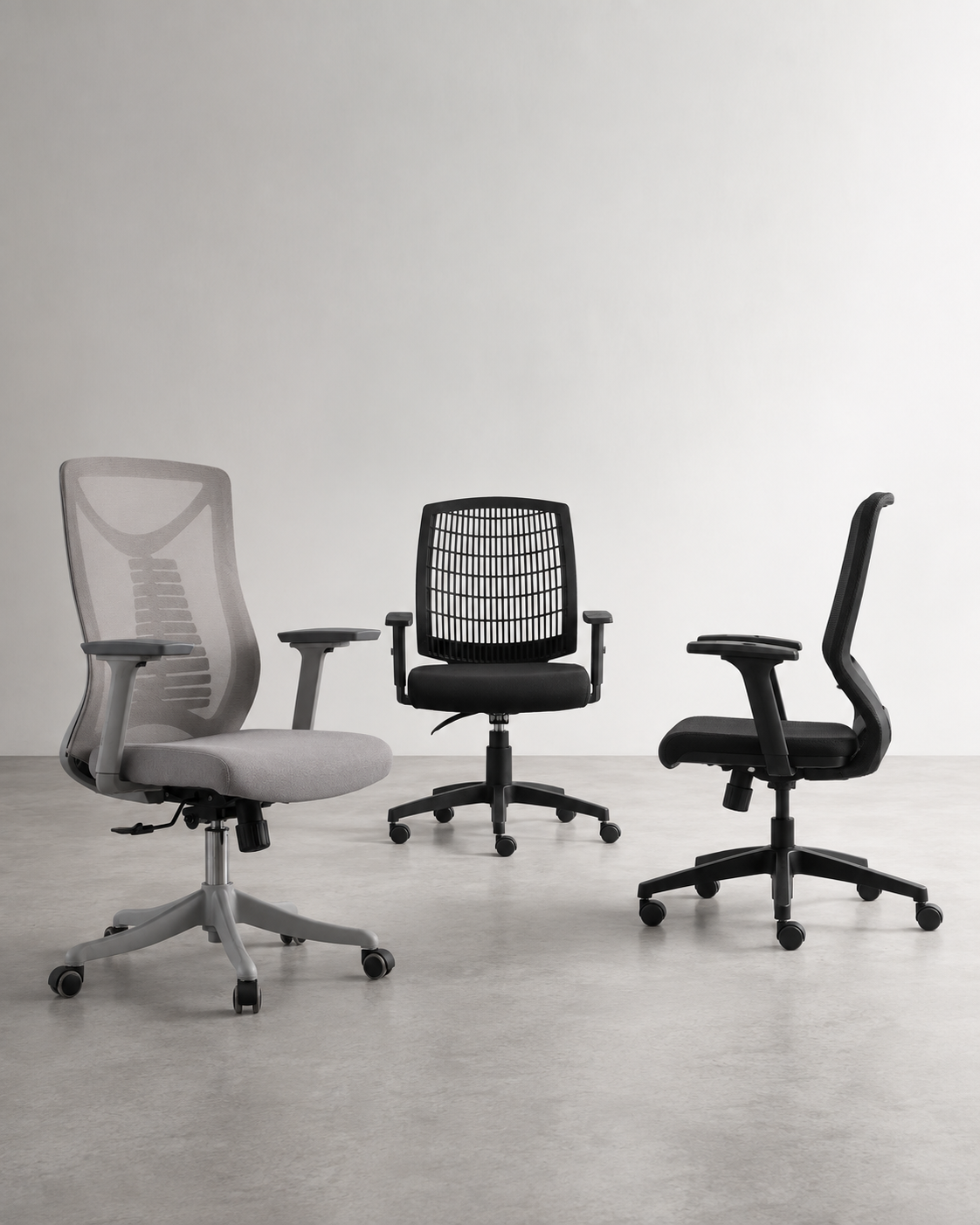
In many companies, the choice of corporate furniture is still treated as an operational purchase: a chair here, a desk there, a few workstations to accommodate the team, and that’s it.
But in practice, the work environment influences much more than the aesthetics of an office.
It impacts comfort, productivity, posture, concentration, brand perception, and even the way people stay and perform within the company.
This is where ergonomics stops being just a technical topic and becomes a strategic decision.
What does NR-17 have to do with this?
NR-17 is the Brazilian Regulatory Standard that addresses ergonomics in the workplace. According to the Ministry of Labor and Employment, it establishes guidelines and requirements to adapt working conditions to the psychophysiological characteristics of workers, seeking to provide comfort, safety, health, and efficient performance at work.
In other words: ergonomics does not look only at an isolated piece of furniture. It looks at the relationship between the person, their function, the environment, and the routine.
When we talk about offices, this involves aspects such as chairs, desks, working height, posture, lighting, circulation, equipment, workstation organization, and time spent in the space.
And here is an important point: choosing the right corporate chair is not simply about looking for a beautiful or cheaper model. It is about understanding the real use of that workstation.
A chair is not a detail
Anyone who works seated every day knows: an inadequate chair shows up in the routine.
It shows up as discomfort at the end of the day.
In the difficulty of maintaining posture.
In decreased concentration.
In the need to improvise support.
In the feeling of fatigue before the day is over.
For companies, this needs to be taken seriously.
After all, if a person spends a large part of the day in a chair, that product stops being just a piece of furniture. It becomes a direct part of the work experience.
That is why adjustments, support, stability, backrest, seat, and suitability for time of use should not be treated as “extras.” They are selection criteria.
Cheap can turn into rework
In corporate purchases, it is common for price to be one of the first filters. And of course, it needs to be considered.
The problem starts when it becomes the only criterion.
A chair chosen only for the lowest price may solve the purchase in the short term. But if it does not support the team’s routine, the cost appears later: early replacement, complaints, discomfort, low durability, and the need to buy again.
At that point, the initial savings can turn into rework.
Ergonomics, when well thought out, helps the company buy better. Not necessarily buy the most expensive option, but choose with better criteria.
Ergonomics also communicates care
There is another point that many companies forget: the environment also speaks about the organization’s culture.
When a company invests in appropriate chairs, well-planned workstations, and functional spaces, it sends a clear message to the team, clients, and partners: there is care for the people who work there.
This strengthens the perception of professionalism, improves the internal experience, and contributes to an environment that is more aligned with companies that want to grow with structure.
In today’s market, where attracting and retaining talent also involves the work experience, the office cannot be seen only as a fixed cost. It is part of the company’s value proposition.
Ergonomics is a productivity strategy
An uncomfortable environment charges its price every day.
Not in a visible line on a spreadsheet, but in the routine: more frequent breaks due to discomfort, distractions, difficulty concentrating, lower productivity, improvised adjustments, and team fatigue.
When the workstation is designed with ergonomics in mind, the company reduces invisible friction in the operation.
The right chair, the appropriate desk, and a functional layout help the team work better, with less discomfort and more flow.
That is why ergonomics is not only a technical requirement. It is also a tool for efficiency.
The company’s role in the choice
For decision-makers, HR, facilities, or corporate buyers, the challenge is not just “buying chairs.”
The challenge is understanding:
What will the daily usage time be?
Who will use this workstation?
Does the role require long hours seated?
Does the environment need visual standardization?
Does the chair offer proper adjustments?
Does the model match the team’s real routine?
Is the choice aligned with the company’s growth?
These questions completely change the quality of the purchase.
Because corporate furniture should not be chosen just to fill space. It needs to support the operation.
Investment, not cost
Seeing ergonomics as a cost means looking only at the purchase value.
Seeing ergonomics as an investment means understanding the impact of that choice on the team’s comfort, productivity, the company’s image, furniture durability, and the reduction of rework.
Growing companies need environments that keep up with that growth.
And this starts with decisions that may seem simple, but make a difference every day: the right chair, the appropriate desk, well-planned circulation, and a workstation prepared for the real routine.
At F5 Office, we help companies choose corporate furniture with greater confidence, combining ergonomics, functionality, and design to create work environments that are more comfortable, professional, and prepared to grow.
Because the next level of a company also begins in the environment where it works.
F5 Office. Update yourself.
See the chair options in the official store:
Gallery